Best Time to Visit Landmannalaugar
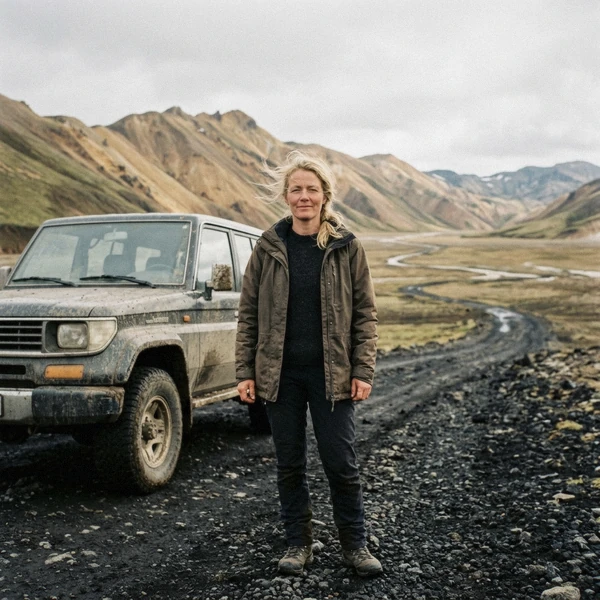
The best time to visit Landmannalaugar is mid July to mid August, and the reason is not the weather. It is that the road authority has had a month to open, inspect and settle the F-roads by then, the snow has gone out of the gullies on Bláhnúkur, and there are still eighteen hours of usable daylight. The whole season is about twelve weeks long, roughly 20 June to 15 September, which makes this one of the shortest visiting windows of any major site in Iceland.
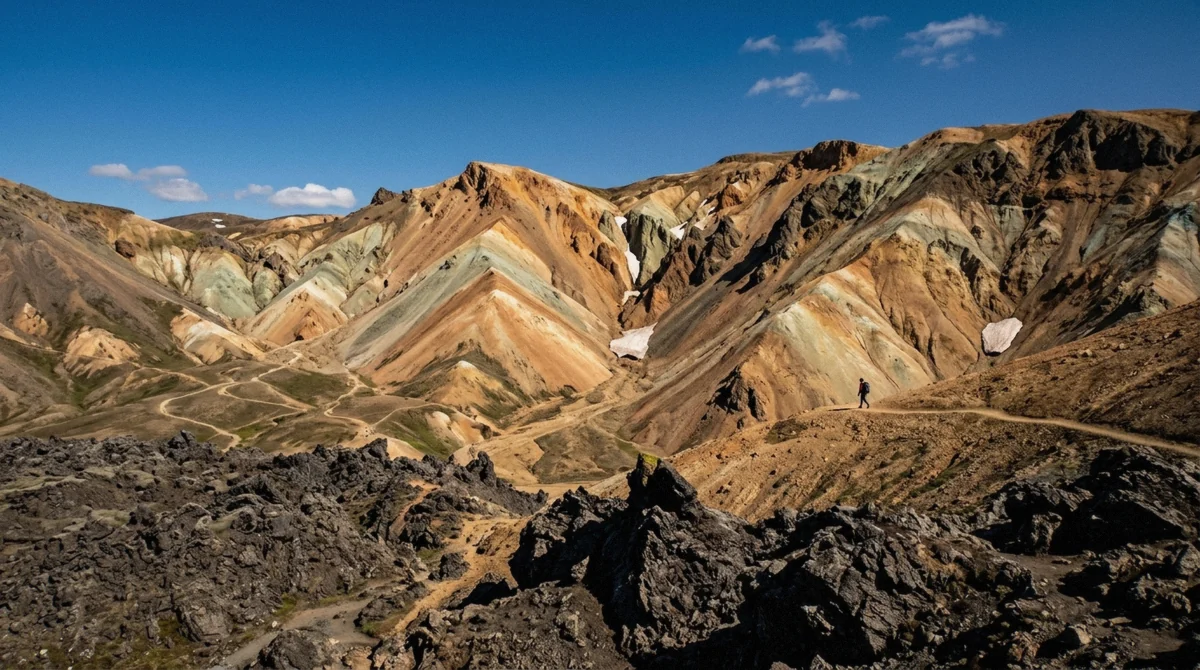
Quick answer
The best time to visit Landmannalaugar is between the middle of July and the middle of August. The road is reliably open, the last snow has left the ridge routes, daytime highs sit around 10°C and there are still sixteen to nineteen hours of daylight. The season as a whole runs from about 20 June to 15 September, set each year by the Icelandic road authority after it inspects the route, and outside that window nothing scheduled reaches the valley.
Key takeaways
- Peak window: mid July to mid August, for open roads, clear trails and long light
- Season overall: roughly 20 June to 15 September, with both edges moving by a fortnight year to year
- July and August average 10°C by day and 4 to 5°C at night, with rain on about a third of days
- Late June is the front-end gamble: the road may not be open and snow can still block the Bláhnúkur ridge
- Super jeep operators often keep running into October, after ordinary access has closed
- Nothing scheduled reaches the valley between October and June, and the hut is shut
Month by Month
The whole year in one table
Temperatures are typical daytime highs and overnight lows in the valley, which sits at 550 m and runs several degrees colder than the coast. Daylight is the average for the month. Road status is what normally happens, not a promise: the road authority sets the dates each year.
| Month | Road | Daylight | Day / night | What it is like |
|---|---|---|---|---|
| October to May | Closed to normal traffic | 4 to 15 hours | Below freezing to 5°C | No scheduled access. Specialist winter expeditions only |
| Early June | Usually still closed | About 20 hours | 9°C / 3°C | Snow on the passes. Nothing to book yet |
| Late June | Opens, typically around the 20th | 20.7 hours | 9°C / 3°C | First departures, snow still in the gullies, very few people |
| July | Open | About 19 hours | 10°C / 5°C | The reliable month. Trails clear, rivers settled, busiest at the pool |
| August | Open | About 16 hours | 10°C / 4°C | As good as July with slightly shorter days and marginally less rain |
| Early September | Open, watching the forecast | About 14 hours | 7°C / 2°C | Empty, cold mornings, autumn colour in the moss |
| Mid September | Closes, typically around the 15th | About 12 hours | 7°C / 2°C | The hut shuts. Super jeeps sometimes continue |
| October | Closed to standard 4x4 | 9 hours falling | 3°C / near freezing | Super jeep departures only, weather decides everything |
Reading the table
The only months where everything works are July and August. June and September both deliver a genuinely better valley in one respect, which is that hardly anyone is in it, and both carry a real chance that the road, the ridge or the weather takes something away from you.
Rain falls on roughly a third of days in July and August, which sounds worse than it is: highland rain here arrives and leaves inside an hour more often than it settles in for the day.
When the Road Opens and Closes
Nobody publishes a date in advance
Vegagerðin, the Icelandic road administration, opens the F-roads when the snow has gone and the ground has dried enough to carry a vehicle without tearing. The crew drives the route, looks at it, and announces the opening the same day or the following morning. There is no calendar and no advance commitment.
In practice the road to Landmannalaugar becomes passable to standard 4x4 vehicles around 20 June and closes around 15 September. A cold spring pushes the opening into July; a dry one has opened parts of F225 in the second week of June. Check umferdin.is on the morning you travel, even as a passenger.
What this means for booking is simple. Anything in the first half of June is speculative, anything after the middle of September is a gamble, and everything in between is normal.
Why super jeeps outlast the season
Lifted vehicles on oversized tyres, with pressure dropped to a few PSI, can cross water and soft ground that stops a standard 4x4. Operators running them often keep departures going into October, after ordinary access has ended, and reviews of one Hella operator are dated to the middle of October in more than one year.
An October valley is a different place: the hut is shut, the campsite is empty, the light is low all day and the weather stops being background. If that appeals, the four super jeep days compared explain which operators run late.
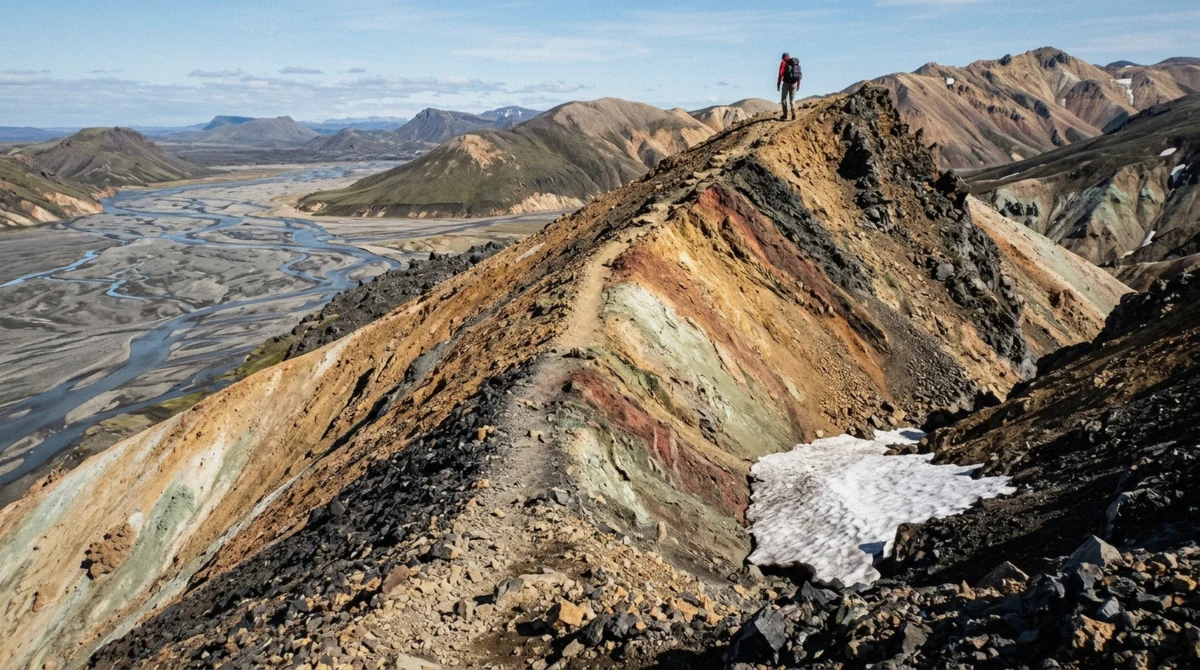
Choosing Your Window
What each window gives and takes
The same trip in three different fortnights. Nothing here is a warning against the shoulder weeks; it is what you are trading for the quiet.
| Window | Crowds | Daylight | What can go wrong | Worth it for |
|---|---|---|---|---|
| Late June | Lowest of the season | 20.7 hours | Road not open yet, snow in the gullies, high rivers | Empty trails and light that never really goes |
| Mid July to mid August | Highest, mostly at the pool | 16 to 19 hours | Very little beyond ordinary weather | A first visit, and anyone with one shot at it |
| Early September | Low again | About 14 hours | Colder mornings, road closing within weeks | Autumn colour in the moss and clear light |
| October | Almost nobody | 9 hours and falling | Only super jeeps run, the hut is shut | Accepting weather as the itinerary |
Mid July to mid August: the safe answer
Everything works. The road has been open long enough that the surface has settled, the river crossings are at their most predictable, the last snow has left the ridges, and there is enough daylight that a 14-hour tour never runs into darkness.
The cost is company. This is when the hot spring has most people in it and when hut beds have been booked out for months. Walking first and bathing at the end of the afternoon solves most of that. Peak-season dates across every guided Landmannalaugar tour go early, and the two days built around walking fill first of all.
Late June: fewer people, more ifs
The first ten days after the road opens are the quietest of the whole season, and the light is at its absolute maximum at 20.7 hours. What you risk is snow still lying in the gullies, which closes the Bláhnúkur ridge, and a road that has been open for days rather than weeks.
Book it with the cancellation policy in mind. Every guided option lets you cancel free up to 24 hours ahead.
Early September: the underrated one
Our favourite fortnight, honestly. The day groups thin out, the moss turns, the mornings are cold enough to be clear, and there are still fourteen hours of daylight at the start of the month. Daytime highs drop to about 7°C, so it is a layers month rather than a shorts one.
By the middle of the month the hut closes and the road follows. Anything booked after about the 15th is a super jeep or nothing.
Time of day matters as much as month
River levels rise through the afternoon as the day's meltwater comes down, so morning crossings are lower and easier. The hot spring is emptiest before about one in the afternoon and after four, when the day tours converge and then leave. Guided departures leave Reykjavik between seven and eight for the first of those reasons, not the second.
Pick Your Month
If You want the highest chance everything works
Mid July to mid August, and book the hut months ahead if you are staying
If You want the valley close to empty
The first ten days after the road opens, or the first fortnight of September
If You want maximum daylight for a long walk
Late June, at 20.7 hours, if the ridges are clear of snow
If You want autumn colour and cold clear mornings
Early September, with warm layers and an eye on the closing date
If You can only travel in October
A super jeep departure, accepting that the hut is shut and weather sets the itinerary
If You are travelling between October and May
Choose somewhere else in Iceland. The road is closed and nothing scheduled runs
What the Weather Actually Does
Cool, changeable and windier than the coast
At 550 m in an open highland basin, this is several degrees colder than Reykjavik on the same day and considerably more exposed. July and August highs average around 10°C with overnight lows of 4 to 5°C, and rain falls on roughly a third of days in both.
The number that catches people is wind rather than temperature. A 10°C day with 15 m/s across the Brennisteinsalda flank is a different proposition from a still one, and it is the usual reason a guide turns a group back from the Bláhnúkur ridge.
What a bad day actually costs you
Rarely the whole trip. Guides shorten or reroute the walk, and a group that loses the ridge still gets the lava field, the gorge and the hot spring. Outright cancellations happen when the road is unsafe rather than when the forecast looks poor, and who makes that call and when you hear is a subject of its own.
Book the highlands early in your stay rather than on your last free day, and the free cancellation window does the rest. What to bring on a day in the valley covers the layers that turn a wet day into a manageable one.
Questions About Timing
What is the best month to visit Landmannalaugar?
July, closely followed by August. Both average around 10°C by day, both have the road reliably open, and July still carries about nineteen hours of daylight. July has marginally more rain and slightly more people; August has slightly shorter days. If you want the same conditions with far fewer visitors, the first fortnight of September is the better trade, at about 7°C by day and with the closing date approaching.
When do the roads to Landmannalaugar open?
Usually around 20 June, though the road authority sets the date each year after driving the route and checking that the ground will carry a vehicle. A cold spring can push it into July, and a dry one has opened parts of F225 in the second week of June. No date is published in advance, so check umferdin.is on the morning you plan to travel. The road normally closes again around 15 September.
Can you visit Landmannalaugar in winter?
Not by any scheduled route. The F-roads close around the middle of September and stay shut until the following June, the mountain hut is closed, and no bus runs. A few specialist operators reach the valley in winter on heavily modified vehicles, but that is a different product at a different price. For most travellers the honest answer is that Landmannalaugar has a twelve-week season and winter is not part of it.
Is late June too early for Landmannalaugar?
It is the gamble at the front of the season rather than a mistake. If the road has opened, you get the emptiest valley of the year and 20.7 hours of daylight. What can go wrong is snow still lying in the gullies, which closes the Bláhnúkur ridge, and rivers running high with late meltwater. Book with the free cancellation window in mind and keep a second day free if the highlands matter to you.
How busy does Landmannalaugar get?
Busy by highland standards and quiet by European ones. The pinch point is the hot spring between one and four in the afternoon in the middle of July, when the day tours are all on the ground at once. The trails absorb people far better than the pool does: half an hour up the Brennisteinsalda path and the crowd disappears. Hut beds are the genuinely scarce thing, booked out months ahead for July and August.
Does the hot spring stay warm in September?
Yes. The pool is fed by a geothermal stream and holds 36 to 40°C regardless of the air temperature, which makes a cold September afternoon one of the better times to be in it. What changes is the walk back to your clothes on the boardwalk, since there is no changing room and the air is around 7°C. A towel and a warm layer within reach matter more in September than in July.
What happens if the road closes after I have booked?
The operator cancels and refunds you in full. Every guided option on this site also lets you cancel free of charge up to 24 hours before departure with nothing paid at booking, so an unpromising forecast costs you nothing to walk away from. The practical advice is to book the highlands early in your trip: a cancellation then leaves you a second chance, where a cancellation on your last free day leaves you with a refund and no valley.
If you have a free choice, take the second half of July or the first half of August and stop optimising. If you are working around fixed dates, late June and early September both give you a quieter valley for a real but manageable risk, and the free cancellation window is what makes that risk acceptable. The one month that changes the answer completely is October, when only a super jeep will get you there at all.